
Define which seawater reaches the mud plant
Identify the source, treatment and relevant variation of the water actually used for mixing. Record its analysis and any fresh-water or brine blend. A seawater label does not explain how hardness, suspended matter or water treatment interacts with the proposed mud formulation.
Send representative water or a clearly documented recipe and identify uncertainty when a laboratory substitute is used. Keep the full additive schedule with the sample request. A freshwater viscosity certificate cannot establish seawater-mud suitability, even when the product name includes a marine application claim.
Separate preparation from polymer performance
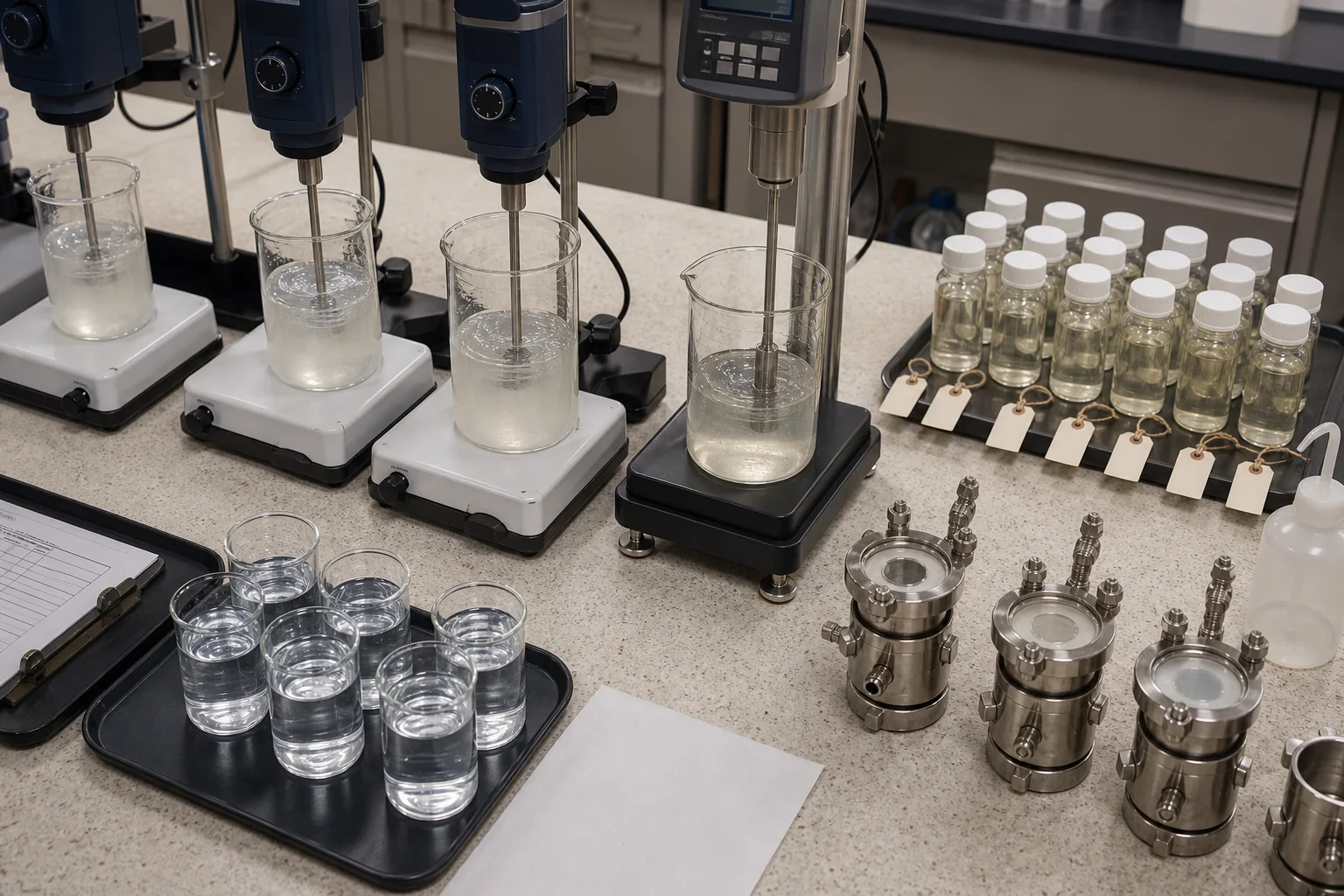
Prepare the candidate with the planned treatment order, available mixing and realistic hydration or activation. Observe wetting, incomplete dispersion and elapsed time. Use the same base mud and comparison concentration basis for the incumbent and alternatives, rather than compensating for a weak sample with an undocumented procedural advantage.
If one candidate needs a different preparation route, test and price that route explicitly. Record whether the existing rig equipment can deliver it consistently. A useful supplier response identifies the limitation instead of hiding it behind an unusually long laboratory conditioning period.
Confirm the whole mud after relevant conditioning
Measure the program's rheology, gels, filtration and shale response at the specified temperature and aging schedule. Include representative solids or contamination where the approved plan calls for it. Preserve both adverse observations and preferred points so a favorable single measurement does not dominate qualification.
Review solids-control behavior and the consequences of dilution or treatment changes with the drilling-fluid team. Do not infer marine-discharge approval, environmental acceptability or well safety from a laboratory encapsulation result. Required documentary and regulatory reviews are separate from chemical performance screening.
Define the approved supply window
The RFQ should state the water recipe, mud formulation, preparation capacity and demonstrated measurements, together with sample and trial quantity. Request applicable documents and confirmation of the commercial identity before delivery. Where a condition remains untested, preserve it as a hold point.
Approve the product only for the formulation and water window supported by the evidence. Define checks after a changed water source, treatment program or supplied code. This keeps procurement connected to the actual marine mixing duty without implying that all seawater-based muds require the same PHPA.
Related qualification and order decisions
Keep the corresponding operating test record with the purchase evidence. Further checks include PHPA Dry or Liquid Supply: Compare Rig Mixing and Mud Acceptance and PHPA for KCl Water-Based Mud: What a Purchase Brief Must Specify.
Request a coded sample or a bounded trial quotation through the oilfield polymer operating brief. Include the duty, actual water or formulation, preparation limits, acceptance method, quantity and destination; distinguish demonstrated results from conditions still awaiting qualification.