
Name the drilling-fluid function
Partially hydrolyzed polyacrylamide may be considered for encapsulation, cuttings integrity, rheology or selective flocculation in a water-based system. State the intended function and complete mud formulation.
PHPA does not replace a drilling-fluid program. Compatibility with salts, clays, weighting material, fluid-loss additives and contamination must be demonstrated.
Use representative make-up water
Prepare tests with the actual freshwater, seawater or brine source and planned treatment order. Record pH, hardness, salinity, temperature and mixing energy.
Dissolution and polymer conformation can change with water chemistry. A clear freshwater solution is not evidence of performance in the field mud.
Measure rheology and filtration
Compare plastic viscosity, yield behavior, gel development and filtration with the operator's current methods and temperature conditioning. Observe whether polymer addition causes uncontrolled viscosity or poor solids handling.
Use a blank and incumbent reference. Report the whole mud response, not only one favorable rheology value.
Evaluate shale and cuttings response
Run the operator-approved dispersion, recovery, accretion or related shale protocol using representative material. Keep salt concentration, rolling time and temperature consistent across candidates.
A candidate should support the intended inhibition or encapsulation outcome without compromising hole cleaning or solids-control equipment.
Reproduce mixing and circulation shear
Document the hopper, mixing time, hydration period and order of addition. Apply representative dynamic aging and circulation shear before final measurements.
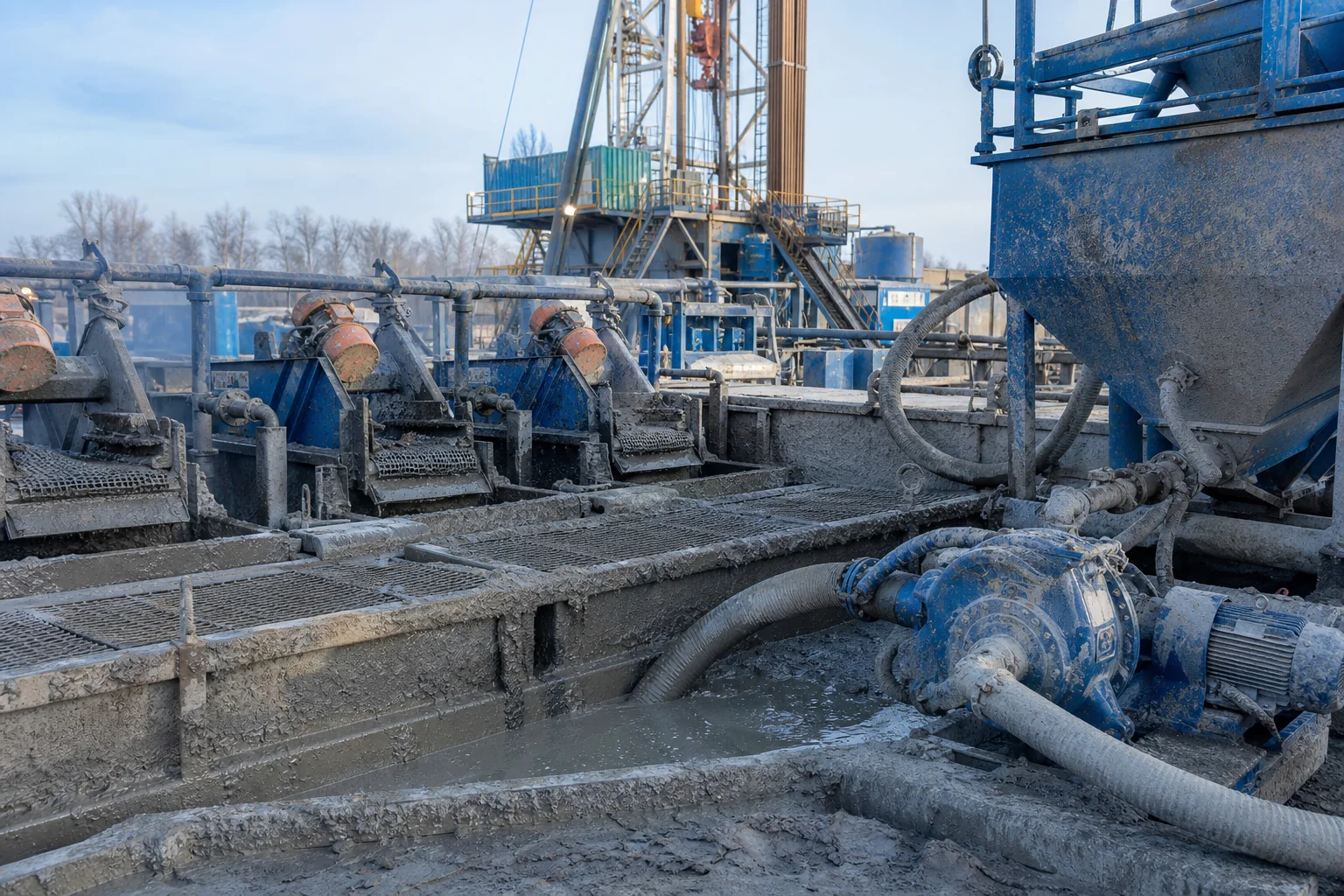
If the laboratory requires unusually gentle preparation, scale-up risk is high. Verify the product through the real surface system before routine use.
Define supply identity and acceptance
Link the selected sample to product code, lot, particle handling, COA, SDS and preparation instructions. State packaging and rig-site storage limitations.
Final acceptance belongs to the operator's drilling-fluid program and well conditions. Avoid universal dosage or performance claims.