
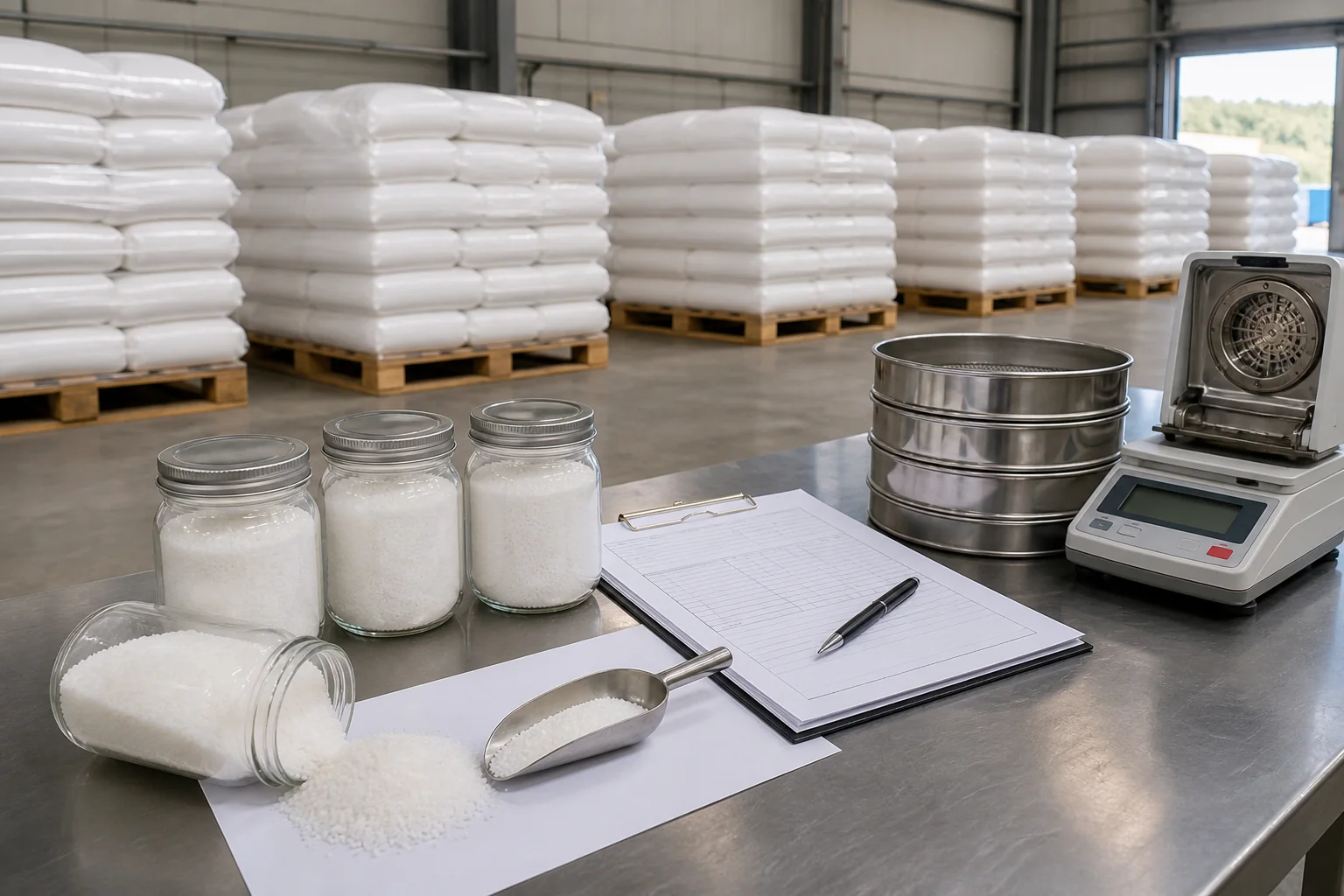
Compare qualified concentrations, not isolated bag prices
Two EOR polymers can reach the required solution response at different concentrations and retain different properties after pumping. Obtain a comparable dose-response curve in the actual brine at the agreed temperature and shear rate. Reject a price comparison that assigns both products the incumbent concentration without demonstrating that it is appropriate.
Keep filtration and other technical gates in the comparison. A cheaper solution that fails cleanliness or the operator's qualification limits remains unqualified; it should not receive a speculative recovery credit. Product price is one input to an accepted injection-fluid cost, not the technical decision itself.
Show the mass basis in the calculation
If C is active concentration in kilograms per cubic metre, P is price per kilogram of supplied product and a is confirmed active mass fraction, chemical cost per cubic metre is C × P ÷ a. Use the product basis actually documented by the supplier rather than treating all powder solids as proven active polymer.
For arithmetic illustration only, C = 1, P = 2 currency units and a = 0.8 give 2.5 currency units per cubic metre. One thousand milligrams per litre equals one kilogram per cubic metre. These inputs are not a recommended injection concentration, product assay or current market quotation.
Price the route that delivers the accepted fluid
List make-down utilities, transfer losses, filtration consumption, preparation labor and any required equipment changes separately. Identify freight destination, delivery terms, package net mass and charges included in the quotation. Comparing warehouse powder price with a field-delivered liquid package hides a material difference in commercial scope.
Use retained solution response after the qualified handling route, not only viscosity measured before a pump. If the candidate needs a different concentration or preparation sequence, include those implications explicitly. Leave unmeasured operating benefits unpriced rather than presenting optimistic assumptions as trial evidence.
Keep reservoir economics with the project team
A solution-cost worksheet does not establish oil recovery, project return or the appropriate injection strategy. Reservoir response and the value of produced fluids require the operator's separate engineering and economic work. Do not describe a lower chemical cost per cubic metre as proof of a better reservoir outcome.
Ask for a quotation tied to the demonstrated grade, water envelope, concentration basis and delivery scope. Retain the comparative curves and qualification limitations with the purchase record. Repeat measurements when close differences are smaller than the uncertainty in concentration, active content or the viscosity method.
Related qualification and order decisions
Keep the corresponding operating test record with the purchase evidence. Further checks include EOR Polymer Powder or Liquid: Compare the Complete Quotation Scope and Oilfield Polymer Pilot Orders: Calculate Quantity for Valid Trial Periods.
Request a coded sample or a bounded trial quotation through the oilfield polymer operating brief. Include the duty, actual water or formulation, preparation limits, acceptance method, quantity and destination; distinguish demonstrated results from conditions still awaiting qualification.