
Do not buy against an undefined filter-ratio number
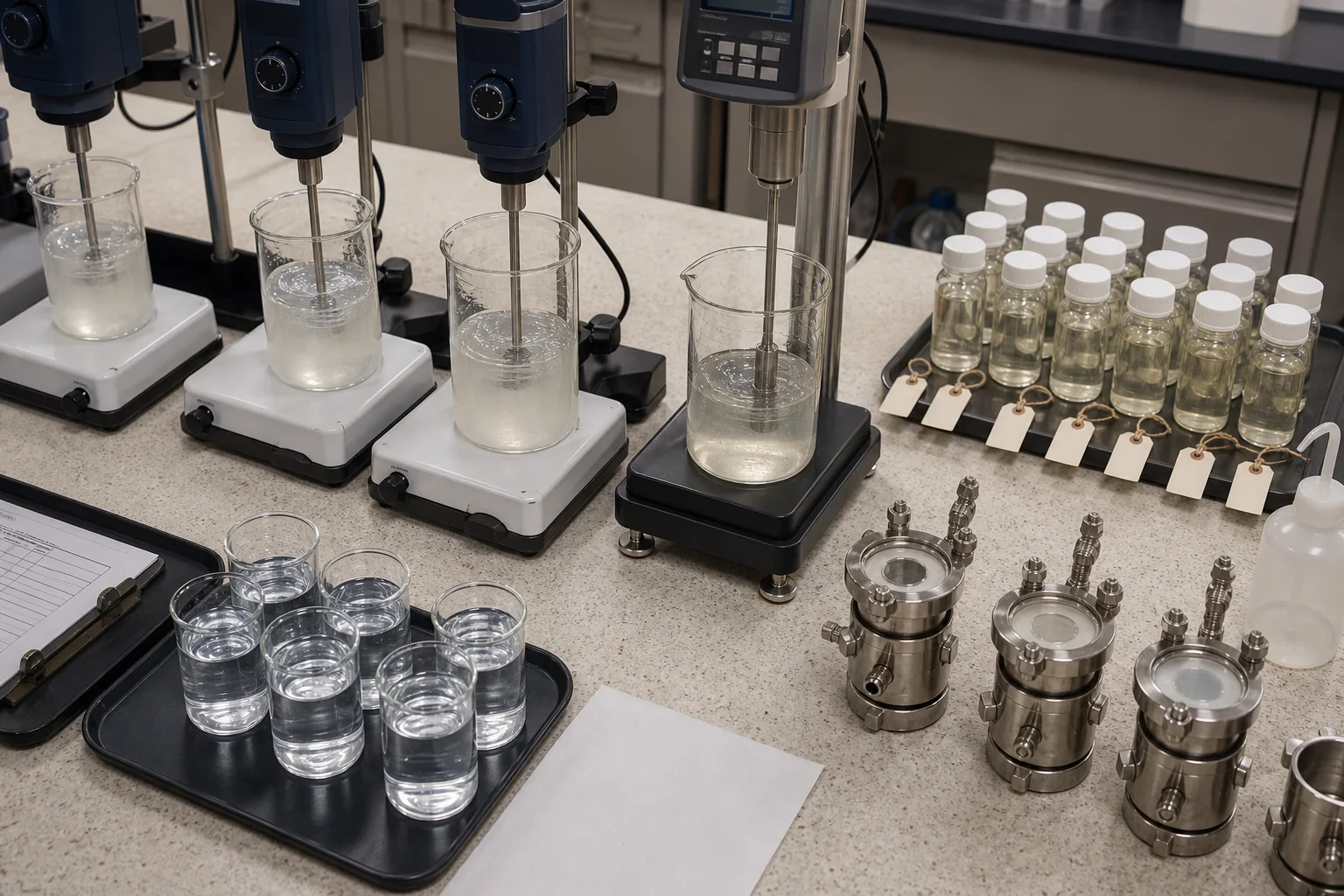
A reported filtration result depends on the apparatus, membrane or medium, solution condition and calculation. Ask for the complete method, including how the reported value is derived. Two certificates using different filtration procedures cannot be ranked reliably merely because one number appears lower.
Use the operator's accepted protocol and applicable version where a formal method is specified. Do not invent a universal numerical limit or describe a supplier's house method as an industry standard. The purchase document should identify which procedure and decision boundary actually govern this project.
Preserve the solution history
Record polymer code, water, concentration basis, wetting, hydration or activation, final dilution, solution age and temperature. Include any pretreatment that changes particles or dissolved compatibility. A sample tested after an undisclosed polishing step may not represent the fluid delivered by the field system.
Pair filtration with the required viscosity reading and a preparation reference. Otherwise a more dilute or degraded solution could appear easier to filter while no longer meeting the mobility-control objective. Keep the test order and sample handling consistent when laboratories exchange qualification results.
Investigate pressure behavior rather than only a pass label
Retain the relevant time, pressure and throughput observations as required by the method. Note visible residue, haze, gel particles or deposits without assuming their cause. Repeat with fresh correctly prepared reference material when water contamination or incomplete hydration could explain a poor result.
A screen test can identify solution-cleanliness concerns but cannot prove reservoir compatibility. Core work, adsorption or retention assessment and field injectivity evidence answer additional questions. Those requirements belong in the staged qualification plan rather than being silently waived after a favorable membrane result.
Link receiving checks to the accepted laboratory basis
Agree what the supplier provides with each shipment and what the receiving laboratory can reproduce. Preserve filter identification, water recipe and preparation record with the accepted sample. If a simplified receiving check is used, document its relationship to the full qualification method and its limitations.
Ask for the proposed production code, current documents, retained reference and change-notification process. Revisit the criterion when preparation equipment, water or product identity changes. A testable filtration requirement protects purchasing from vague claims while keeping the engineering decision tied to the actual injection duty.
Related qualification and order decisions
Keep the corresponding operating test record with the purchase evidence. Further checks include HPAM for Polymer Flooding: Write a Testable Purchase Specification and EOR Polymer Samples for Core Testing: Separate Screening from Supply Release.
Request a coded sample or a bounded trial quotation through the oilfield polymer operating brief. Include the duty, actual water or formulation, preparation limits, acceptance method, quantity and destination; distinguish demonstrated results from conditions still awaiting qualification.