
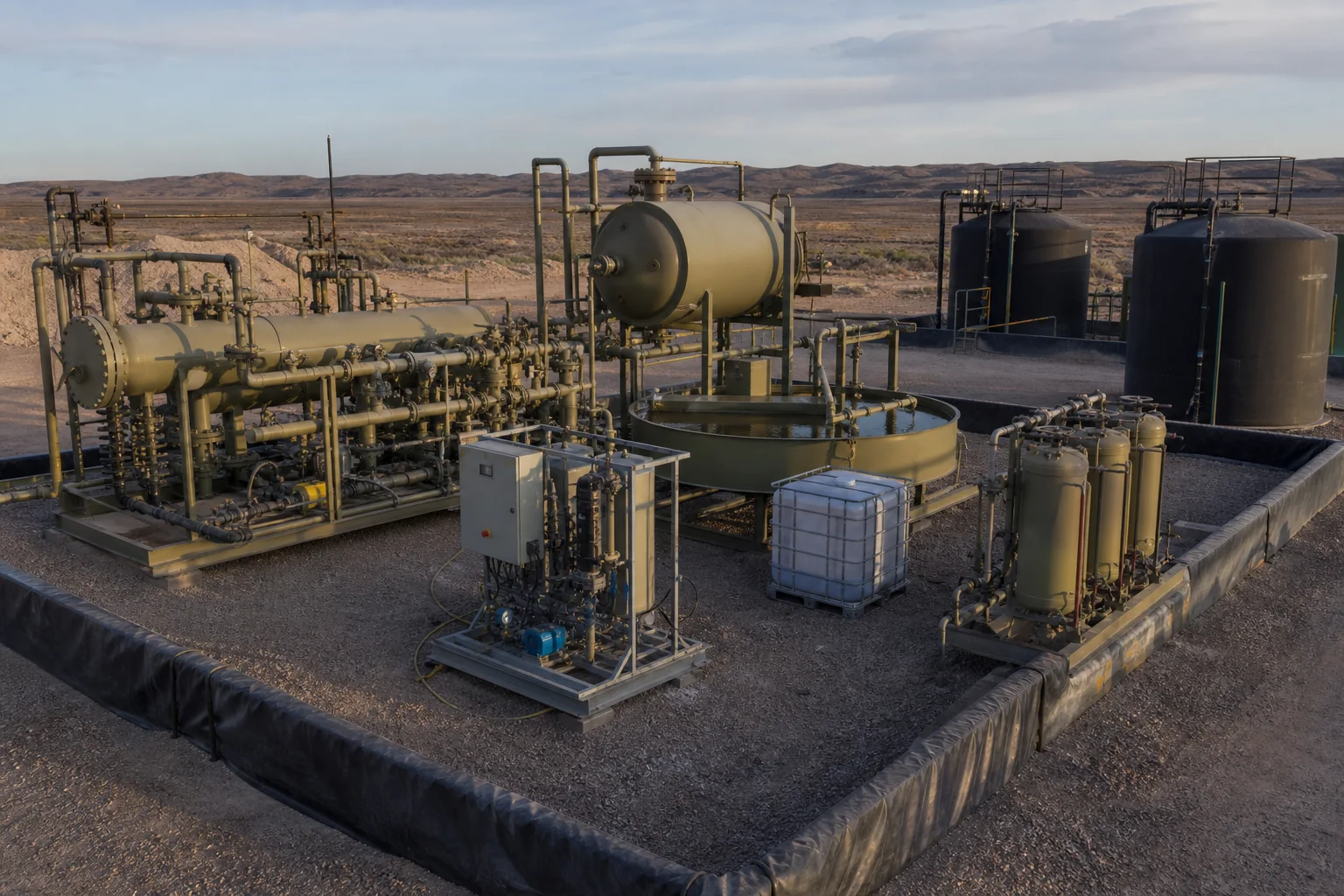
Sample the residual, not the original produced water
Collected flotation sludge contains concentrated oil and solids plus upstream chemical history. Identify the actual feed entering dewatering, its holding time, solids, temperature and transfer route. A water-clarification result does not qualify the same grade for the concentrated residual.
Keep product codes and intended functions separate in the purchase request. A flotation aid may influence subsequent conditioning, but that does not establish the appropriate dewatering dose or polymer family. Provide a current residual sample rather than assuming a supplier can infer its behavior from the initial water analysis.
Screen with the existing chemistry in place
Compare a bounded candidate set using matched preparation and a confirmed active-dose basis. Include the incumbent and an appropriate blank. Record upstream demulsifier, coagulant and flotation-polymer use because changes can alter the residual presented to the dewatering product.
Test representative storage and transfer conditions rather than a freshly collected favorable fraction alone. Observe drainage, fine-solids escape and floc resilience. If additional conditioners are proposed, keep their consumption and added solids visible instead of attributing all improvement to the new polymer.
Qualify the installed separator and handling route
Name the belt, screw press, centrifuge or other unit and use the measurements appropriate to it. Read capture, liquid quality, cake condition, throughput and operator interventions together. Oily or sticky cake may create release and transport problems even when a laboratory drainage result appears favorable.
The operator must assess waste characterization and disposal requirements separately. Polymer treatment does not establish that an oilfield residual is non-hazardous or suitable for a particular destination. Sampling and handling should follow the plant's relevant safety procedures rather than an improvised supplier demonstration.
Define a traceable trial and supply boundary
Send the supplier residual history, equipment limits, current consumption, required outcomes and trial schedule. Ask for current documents and enough coded material for repeated stable operating points. Separate the new dewatering offer from any proposed change to the original flotation program.
Approve the grade for the residual and machine window actually tested, with receiving checks and review triggers. Compare qualified treatment and handling cost rather than simply adopting the existing water-treatment product. A distinct purchase identity keeps future changes in either duty from silently bypassing the other approval.
Related qualification and order decisions
Keep the corresponding operating test record with the purchase evidence. Further checks include Produced-Water Flotation Polymer: Buy Against Oil, Solids and Float Handling and Oilfield PAM First-Lot Acceptance: Reproduce the Approved Application Test.
Request a coded sample or a bounded trial quotation through the oilfield polymer operating brief. Include the duty, actual water or formulation, preparation limits, acceptance method, quantity and destination; distinguish demonstrated results from conditions still awaiting qualification.