
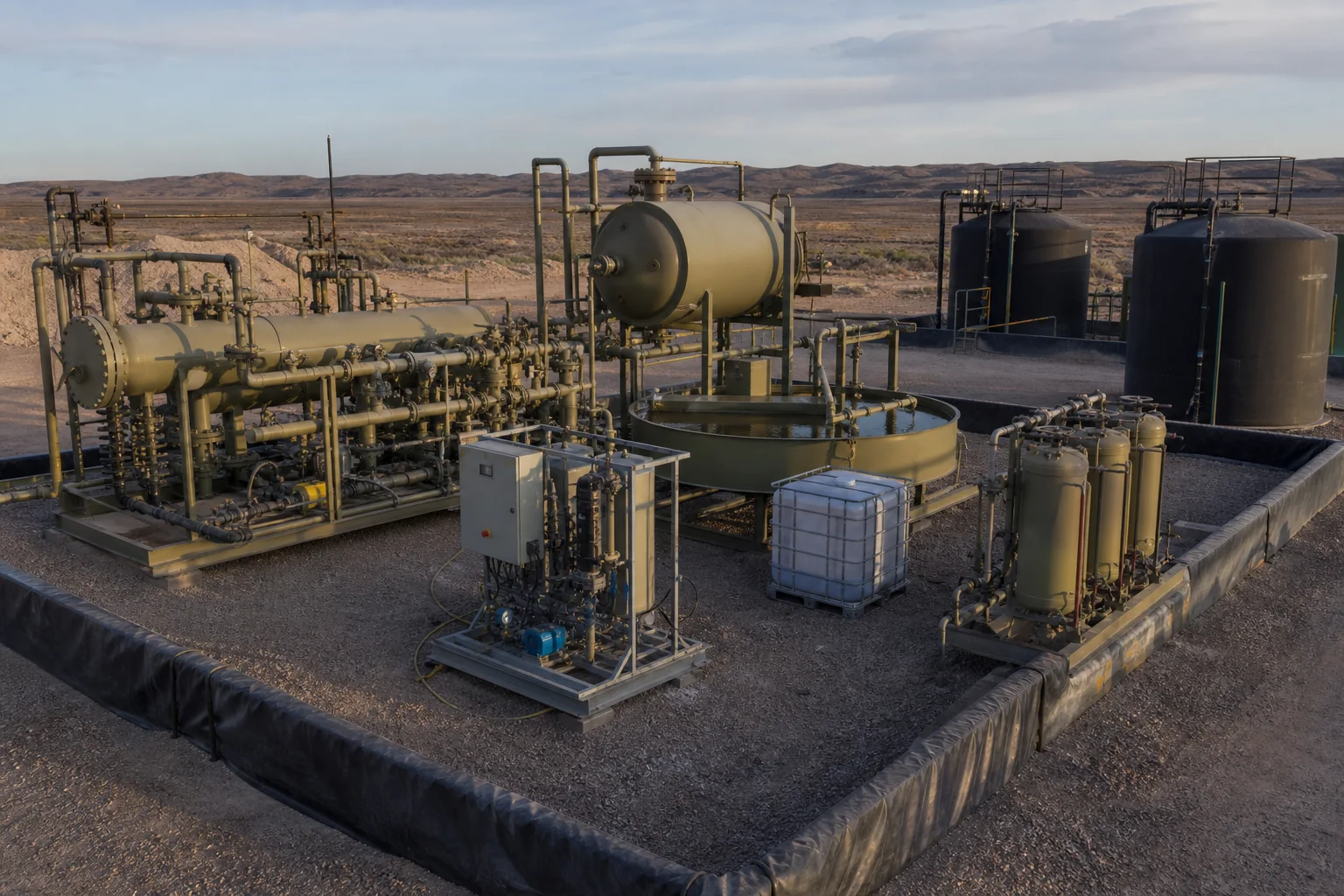
Do not assume polymer addition belongs in every filter train
A proposal to add polymer ahead of reinjection-water filtration needs a defined separation benefit and explicit downstream review. Describe the treatment stages, filter media, current loading and the problem to be corrected. Some trains may not accept the proposed chemistry or carryover; compatibility cannot be inferred from the polymer name.
Keep the distinction between a separation aid removed with solids and EOR polymer intentionally injected for mobility control. Those are different duties with different acceptance logic. A grade approved for one should not enter the other merely because both processes handle oilfield water.
Follow residuals through the actual sequence
Test with the water after normal upstream chemistry and preserve relevant temperature and residence. Measure oil and solids removal together with floc carryover, filter response and the operator's required residual checks. A low turbidity reading alone does not show that downstream media or the formation is protected.
Record preparation, active dose, contact and transfer shear. Evaluate the actual separation step before filtration rather than dosing polymer into a simplified water sample and filtering away every visible problem by hand. Undisclosed laboratory polishing can hide field carryover risk.
Use project-specific acceptance and stop gates
Include pressure or run-length behavior, backwash or cleaning implications and the relevant water-quality measurements under the authorized trial plan. Compare incumbent or untreated conditions where appropriate. The responsible technical team determines what evidence is needed for the receiving filter and injection system.
A bench filter passing one batch does not establish reservoir injectivity, chemical approval or suitability for another media type. Keep additional core, formation or field requirements explicit. Do not change well operating limits or increase chemical addition to overcome unexplained pressure behavior during a purchasing comparison.
Quote only the qualified pretreatment scope
Request sample identity, documents, preparation guidance and a bounded trial quantity. Specify which downstream reviews remain open and what would stop progression to routine supply. A supplier should be able to identify when the proposed product is a poor fit instead of offering a universal clarification grade.
Release the accepted code only for the demonstrated water, separation and filtration sequence. Re-evaluate changes in media, upstream program or supplied identity. Keep the procurement record tied to the complete train so an attractive solids-removal result does not bypass a critical carryover requirement.
Related qualification and order decisions
Keep the corresponding operating test record with the purchase evidence. Further checks include Produced-Water Flotation Polymer: Buy Against Oil, Solids and Float Handling and HPAM Filterability in a Purchase Specification: Define the Method.
Request a coded sample or a bounded trial quotation through the oilfield polymer operating brief. Include the duty, actual water or formulation, preparation limits, acceptance method, quantity and destination; distinguish demonstrated results from conditions still awaiting qualification.